Dear Reader,
Elon Musk wants to turn SpaceX into a $6.5 trillion company.
His plan calls for a million AI satellites — and one critical chip.
I call it the StarChip.
And the company making it isn’t Nvidia. It isn’t AMD. It isn’t ARM.
It’s a company most investors have never heard of.
Elon can build the rockets. He can build the satellites. He’s even planning a $119 billion factory to make his own AI processors.
But this chip comes from someone else.
Last December, in an announcement filed with the SEC, SpaceX’s president, Gwynne Shotwell, said:
Without it, those flying computers can’t deliver what their customers are paying for.
To understand how I found it, you have to see who I’ve been sitting down with.
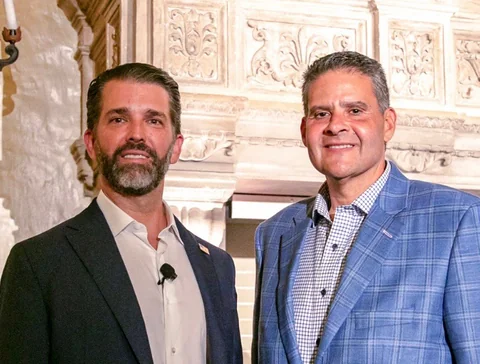
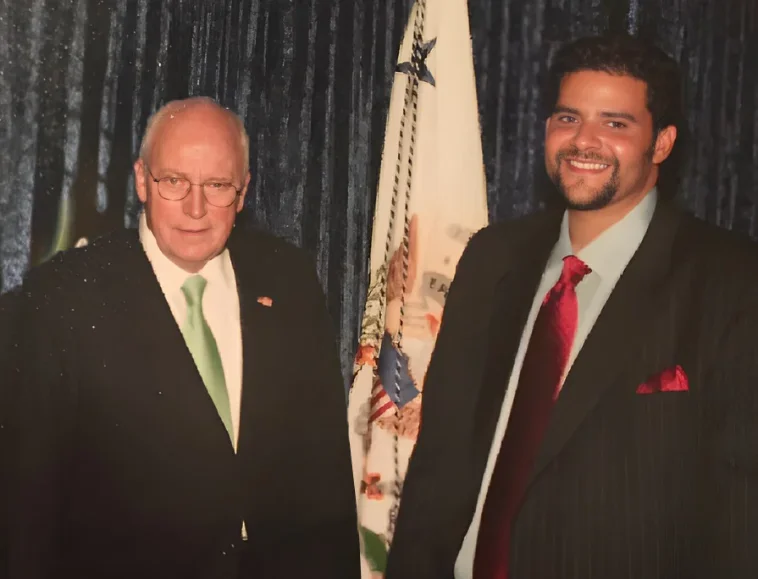
That’s me on the right. And yes, that’s Donald Trump Jr. standing next to me, at a private dinner at The Breakers in Palm Beach, a stone’s throw from Mar-a-Lago.
It’s not my first time standing with some of the most powerful people in the country, like when I met with President Bush and Vice President Cheney in 2006.
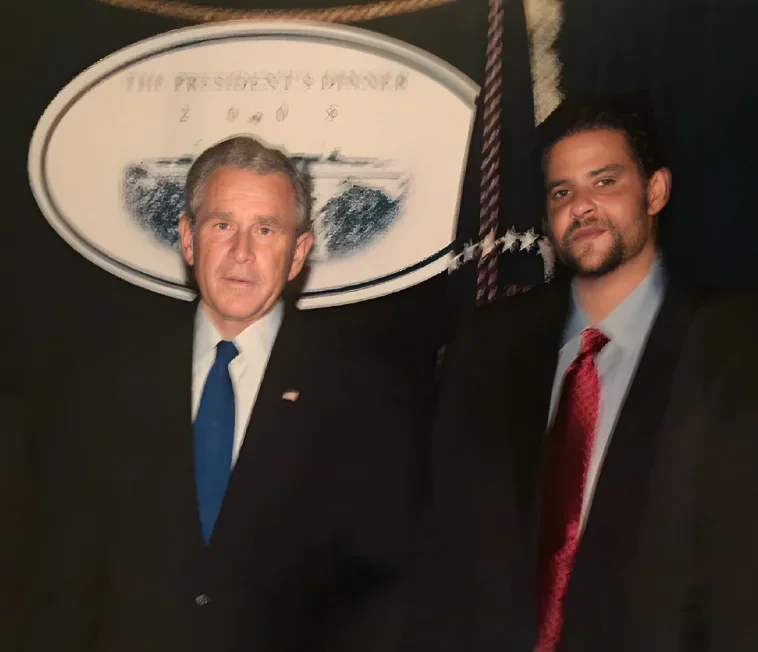
But this story starts with a different dinner. On the evening of March 2nd, I sat down with one of the most powerful men in America.
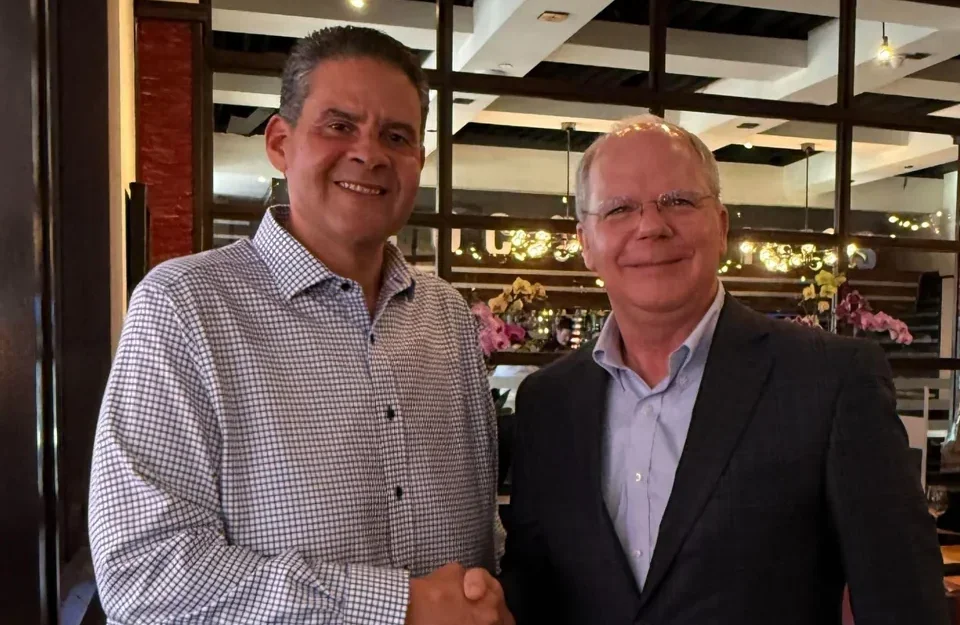
Congressman Brett Guthrie chairs the House Energy and Commerce Committee. It’s the oldest committee in Congress, and it controls every piece of American energy legislation.
Over 2 hours at a corner table in Boca Raton, I walked him through my research.
And then I listened.
I can’t share everything he told me that night.
But I can tell you this.
He confirmed that the most powerful people in Washington are all staring at the same crisis.
A crisis that comes down to one number.
America cannot build enough electricity to run the AI it’s already paying for.
And 19 days after that dinner, Elon Musk posted the same number on X.
That night in Austin, Texas, he announced what he was going to do about it.
Not more power plants.
Not more Nvidia chips.
Something nobody in that room expected. Something that sent me back to my desk for 7 months… and led me to the StarChip.
What I’m About to Share Could Change Everything You Know About Making Money
After that dinner, I started digging.
Over the next few minutes, I’ll show you what I found.
First, I’m going to give you a free ticker symbol that puts a whole basket of space companies in your account. Rockets. Satellites. The equipment connecting them. All in one investment.
And I’m going to show you why a company most investors have never thought about is about to be swept up in the biggest buildout of Elon’s life.
A company whose chips are already inside more than 10,000 of his satellites.
When I look at the math, the upside is staggering.
If this stock simply catches up to the last quiet supplier the market woke up to during the AI boom, we’re looking at 500% to 1,000% gains.
A $10,000 position could become $50,000. $100,000. Possibly more.
There’s also a faster way this could pay off.
If Elon does what I think he’s going to do, what he’s done before when he couldn’t build something himself, he could buy the company outright, and the stock could jump overnight. Now, I never make promises about the stock market.
Nobody can.
But I’ve never seen a setup this lopsided in our favor in 35 years.
And I’m going to show you how to position yourself before December 31st, the last day Elon can break ground with Washington paying a third of the bill.
But first, you need to understand the sheer scale of what we’re talking about.
The Thing Elon Said in Austin
It was a Saturday night. March 21st.
Elon stood up at the old Seaholm Power Plant in Austin and announced the largest chip factory ever conceived.
100 million square feet. 10 times the size of his Texas Gigafactory.
He called it the Terafab.
And then he said the part that matters.
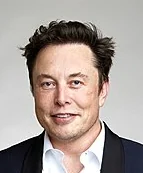
Think about who’s talking.
This is the man who buys more Nvidia chips than almost anyone on Earth.
He’s raising $40 billion right now to buy more of them.
And he’s telling you, in public, that he can’t get the chips he needs.
So he’s going to make his own.
A new kind of chip. Built for a job no chip has ever done.
Building his own AI processors solves one problem.
It still leaves one critical part of his plan in somebody else’s hands.
The StarChip.
His $6.5 trillion target hangs on it.
It could become the most important piece of silicon of the next 20 years.
And I believe that’s where the biggest money will be made.
The Problem:You Find Out Last
Now, here’s the thing most people don’t realize.
By far, the single greatest wealth-creation opportunities in history have come from owning the quiet company a giant can’t live without. Before anyone notices.
You’ve probably heard the stories.
A little company called Lumentum sold the light inside the cables that connect AI data centers. In August 2024 you could buy it for about $40.
By October 2026 it went as high as $1,133.
That’s a 2,714% gain.
A $10,000 investment would have become $281,380.
But here’s the problem.
By the time you read about a company like that in the Wall Street Journal, the move is over.
The insiders knew. The suppliers’ own executives knew. The Wall Street analysts who cover them knew.
You found out when it hit the front page.
And by then the biggest gains were already gone.
If you’ve ever wondered why your investments haven’t performed the way you’d hoped, even when you picked “good” companies, this is why.
It’s not your fault.
The game has been rigged against you from the start.
The Rigged Game Ends Today
But here’s the good news.
This time, I found the dots before Wall Street connected them.
I found the StarChip supplier I believe Elon can’t do without.
All you need is a regular brokerage account and the research I’m going to put in your hands today.
In a moment, I’ll show you exactly why one company sits at the center of this entire opportunity, and how you can position yourself before Wall Street catches on.
A company Elon has trusted more than 10,000 times.
A company that Wall Street is pricing like an old parts maker.
A company you can buy right now, today, for the price of a nice dinner.
And I’m going to give you everything you need to start taking action today, beginning with a free ticker that puts dozens of space companies in your portfolio.
But you need to act quickly.
Because the window is closing.
The Ground Breaks Before December 31st
Let me tell you about a date.
December 31st, 2026.
That’s the day a law passed by Congress stops paying for new American chip factories.
Here’s how it works.
Under Section 48D of the tax code, any company that starts building a chip plant in America gets 35% of the cost back from the federal government.
A third of the bill, paid by Washington.
But the law has a cutoff. In the government’s own words, the credit “shall not apply to property the construction of which begins after December 31, 2026.”
After that day, the 35% is gone.
Now look at what Elon filed with the State of Texas in September.
Construction start date for the Terafab: December 1st, 2026.
30 days before the credit dies.
That is not a coincidence. That’s a man racing a deadline with $119 billion on the line, and a third of it riding on which side of New Year’s Eve the first shovel lands.
And the company behind the StarChip is already supplying his satellite network.
Now he’s preparing a much bigger buildout that will need more StarChips.
I want you in that company before Wall Street starts pricing it for what Elon is building next.
Most investors will hear about this on CNBC after the fact.
They’ll chase the stock after it’s already doubled.
But you don’t have to be one of them.
If you’re reading this right now, you still have time to position yourself before December 31st. But that window is closing fast.
Which is why I’ve dropped everything to rush you this message today.
What I Discovered When I Got Home
Now let me tell you what happened after that dinner in Boca Raton.
I kept turning the Chairman’s number over in my head for a month.
Half a terawatt.
All the electricity America uses. And the AI companies want more than that.
So I did what I’ve done for 35 years when someone gives me a thread worth pulling.
I pulled the SpaceX prospectus. All 400 pages of it.
I pulled the application SpaceX filed with the FCC on January 30th.
And then, lo and behold, 19 days after that dinner… I took a close look at what Elon put on that slide in Austin…
What I found confirmed everything Congressman Guthrie had told me.
And it revealed something even bigger.
The $119 Billion Problem Hiding in Plain Sight
You see, there’s a problem nobody in Austin talked about.
Here on Earth, an AI data center makes its money through fiber-optic cables buried in the ground.
A question goes in. An answer comes out. Somebody pays for it.
The cost is the electricity pushing that data through the cables.
In orbit, there are no cables.
So every answer an AI satellite works out has to jump across a laser beam to a Starlink satellite, with both of them racing around the planet at about 17,000 miles an hour. Then Starlink beams it down to the ground. That’s how Elon says it will work.
That’s data transfer. And it’s the only way a satellite full of AI chips ever earns a dime.
SpaceX put it in writing.

Elon’s chips are the brain.
The StarChip is the data transfer tech that keeps his satellites from just being expensive junk floating in orbit.
Think about what that means.
Elon is about to spend up to $119 billion making chips that can’t earn a dime in orbit without the StarChip, a chip he has to get from someone else.
And you already know what Elon has done before when he couldn’t build something himself.
I believe the StarChip supplier is next.
The “Secret Supplier” That Controls Elon’s Future
Here’s what I uncovered after that dinner.
Here’s what CNBC hasn’t reported.
Here’s what most Wall Street analysts still haven’t figured out.
There is one company on Earth that already builds that data transfer tech for Elon.
Every satellite needs it, and it has to work in a vacuum, with the Sun on one side and absolute zero on the other.
And it has already done that job for Elon.
Not once.
More than 10,000 times.
While everyone is watching Elon’s AI chips, this company is building the StarChip.
Wall Street is pricing them like a boring parts maker.
I’ve spent the last 7 months researching this company… because I’ve been SHOCKED Elon would allow himself to have such a dependency on such a small company.
I’ve read every filing they’ve made with the SEC about their work with SpaceX.
I’ve calculated exactly what happens to their stock price when the market finally connects the dots.
And I’ll show you exactly what they build, and why they’d be so hard to replace, in a moment. But first, you need to understand WHY the gains could be so explosive.
History Shows What Happens When a Titan’s Quiet Supplier Gets Noticed
Every time a giant builds something the world can’t supply, the quiet company he depends on gets repriced.
Not the headline company.
The one underneath it.
You’ve already seen what happened to Lumentum, the light that carries data between AI servers. 2,714%.
Here are two more from the AI buildout that’s happening right now.
Credo (CRDO): The Cable Inside the Rack
Credo makes the copper cables that connect the chips inside an AI server rack. Amazon took a warrant on the company before most investors had heard its name.
In May 2023 the stock traded around $7.
By June 2026 it went as high as $302.
That’s a 4,016% gain.
A $10,000 investment would have turned into $411,592.
Here’s another.
Celestica (CLS): The Switch Between the Servers
Celestica builds the network switches that move data between the servers in the biggest AI data centers.
In September 2022 the stock traded around $8.
By June 2026 it went as high as $472.
That’s a 5,605% gain.
A $10,000 investment would have turned into $570,531.
All three move data between AI chips: light, copper, switches.
Before their runs, Wall Street priced all three like ordinary parts suppliers. When Lumentum’s run began, the whole company sold for about 2 times its yearly sales.
Then the AI orders hit.
Lumentum’s sales more than doubled in two years. Credo’s more than tripled in a single year. Celestica’s sales of the gear it builds for the biggest cloud companies jumped 72% at the end of 2025.
And Wall Street started pricing them as AI companies.
Lumentum now sells for more than 20 times its sales.
The same wave is now leaving Earth.
The StarChip supplier is earlier in this cycle than Lumentum, Credo or Celestica were when they began their runs.
It’s less followed.
And it occupies an even more critical position in Elon’s supply chain.
Because you can’t swap it out from 600 kilometers up.
And its business is already speeding up.
If the same repricing happens to this stock, if Wall Street simply wakes up to what Elon’s satellites mean for this company, we could be looking at 500% to 1,000% gains or more.
But before I share that with you, you need to understand what happens on December 31st.
The Clock Is Ticking
By December 31st, the first shovels have to be in the ground in Grimes County, Texas, or Washington’s 35% is gone.
December 31st also ends the quarter this company’s CEO said would bring faster growth.
In July, he told investors he expects revenue growth to speed up in the fourth quarter, mainly from its customer programs in AI data centers and low-orbit satellites.
Low orbit is where Starlink flies.
And on September 28th, Starship reached orbit for the first time and released 26 next-generation Starlink satellites — the exact model powered by this company’s chips.
A full Starship can carry 60.
When those fourth-quarter numbers come out early next year, I believe Wall Street will see what Elon’s satellites are worth to the StarChip supplier.
Released 26 of their newest satellites
Expected revenue growth
Wall Street will see what Elon’s satellites are worth
And the company already inside Elon’s satellites will finally get the recognition it deserves.
Most investors will find out too late.
They’ll read about it in the Wall Street Journal after the stock has already doubled.
But you don’t have to be one of them.
I’ve found one ticker that lets you own a basket of space companies through your regular brokerage account.
In a moment, I’m going to give you that ticker.
And then I’ll show you the research behind the one company I believe could deliver the biggest gains of all.
But first, you need to understand the full scope of what Elon Musk is building.
Let me explain.
The Biggest Chip Project in History
You’ve probably heard that Elon Musk builds big.
What you probably haven’t heard is how big this is.
The Terafab’s first phase alone is $16.8 billion.
Tesla and SpaceX announced it in August.
The county filings in Texas run to $119 billion across every phase.
For comparison, the entire Manhattan Project, the program that built the atomic bomb, cost about $44 billion in today’s dollars.
Elon is proposing to spend more than twice that on one factory.
And here’s the number that tells you why.
The Terafab’s goal is to produce one terawatt of computing power per year.
Most people have no idea what a terawatt is. So let me put it in terms you can feel.
The United States of America, all 50 states, every home, every factory, every hospital, every data center, runs on about half a terawatt of electricity.
Elon wants to build computers that need twice that.
Every year.
In his own words, posted the night of the announcement:
Which means the computers he’s building cannot run in the United States.
They can’t run anywhere on Earth.
So he’s putting them in space.
And he’s tied his own pay to it.
It’s in the filing SpaceX sent the SEC before it went public.
Under his AI award, SpaceX hands him shares in 12 steps, one for every $500 billion the company adds in value.
All the way up to $6.5 trillion.
That’s about 3 times what SpaceX is worth today.
He’d already earned the first step. Then, 2 days after he announced the Terafab, SpaceX cancelled those shares and rewrote the award.
Now the first one isn’t possible UNLESS HE PUTS THESE COMPUTERS IN SPACE.
Not one share under that award becomes his until SpaceX finishes data centers in space that can deliver 100 terawatts of computing a year.
Measured by the power those computers run on, that’s 200 times all the electricity America uses.
As you’ll see, SpaceX’s goal to reach that valuation relies on capturing a specific market...
A market SpaceX says it can only reach with data centers off the planet.
And those data centers rely on one chip Elon can’t build.
The StarChip.
I’ll show you exactly how in a moment.
The Application for One Million Satellites
You see, on January 30th, 2026, SpaceX asked the federal government for permission to launch satellites.
Not 100. Not 1,000.
One million.
That’s the number in the filing. “Up to 1,000,000 satellites.”
To put that in perspective, there are about 14,500 working satellites in orbit right now. From every country on Earth. Combined.
Elon wants to launch 70 times that.
And he told the FCC why.
The filing calls it “a first step towards becoming a Kardashev II-level civilization.”
That’s a physicist’s phrase. It means a civilization that uses the energy of its entire sun.
But you don’t need to understand the physics to understand what he’s building.
Each one of those satellites is a computer. A data center. Flying 600 kilometers over your head, running on sunlight.
SpaceX calls the first one AI1. Elon calls the fleet Starmind.
And the first version runs on up to 150 kilowatts of solar power. That’s enough electricity for about 100 American homes.
In one satellite.
Now multiply that by a million.
That’s nearly a third of all the electricity America uses. In orbit.
And that’s where Elon ran into the wall.
The AI Chip Elon Has to Build Himself
You can’t put a regular computer chip in space.
Here’s why.
On Earth, a computer chip is cooled by air. A fan blows across it. Simple.
In space there’s no air.
The only way to get rid of heat in space is to radiate it away, through a big metal panel.
Like the radiator in your car, except there’s no breeze.
And that radiator is the heaviest thing on the satellite.
Every pound of radiator is a pound you have to launch on a rocket.
At a million satellites, those pounds become the whole problem.
Which is why Elon needs an AI chip that nobody has ever built.
A chip designed to run hot. On purpose. So the radiator can be small.
A chip that doesn’t exist in anyone’s catalog.
The night of the Terafab announcement, one of the most respected venture capitalists in Silicon Valley, Steve Jurvetson, sat in the room and wrote down what Elon described. His words:

Elon reposted it. With 9 words of his own.
That’s D3. The brain Elon is building for orbit.
It’s real. It’s on his slides.
And it’s the reason he’s spending $119 billion on a factory.
But building D3 only solves the computing problem.
Those orbiting data centers still need to get their answers back to Earth.
That’s the StarChip’s job.
The Brain in Orbit
Let’s be clear about one thing. This is not about putting a few computers on a rocket.
If you think this is about Elon’s ego, you are missing the forest for the trees.
What SpaceX is building isn’t a satellite company.
It is a new place to put the world’s thinking.
To understand the magnitude of this, you have to look at the three things Elon has that nobody else has.
He has the rocket. Starship carries 100 tons to orbit in one launch, and nobody else on Earth has a rocket in that class.
He has the factory. SpaceX is expanding its plant in Bastrop, Texas to build the AI satellites on the same lines that build Starlink.
And as of March 21st, he’s building the fab.
Every other AI company, OpenAI, Google, Anthropic, is fighting for power on Earth.
They’re buying natural gas plants. They’re restarting nuclear reactors. They’re waiting years for a grid connection.
Elon looked at that fight and left.
And SpaceX’s own prospectus explains why.
It says SpaceX is chasing the biggest market in human history. And $26.5 trillion of it is AI.
But it also says that market’s growth...
“will be constrained by Earth’s inability to rapidly scale power generation.”
Earth can’t keep up. Power from the Sun, it says,
“offers the only truly scalable solution.”
That’s the specific market I told you about. And Elon is going after it from orbit.
In his words, from June 8th:
Read that again.
The richest man in the world believes that within 3 years, it will be cheaper to run AI in orbit than in Virginia.
SpaceX plans to send the AI satellites’ answers home through Starlink — a network running on StarChips.
The Wall Elon Hit on June 8th
On June 8th, 2026, four days before SpaceX went public, Elon sat down on camera with his own satellite engineers and walked through the design.
The video is filed with the SEC. Anyone can read the transcript.
He put a slide on the screen. It listed the three things that limit how much AI you can put in space.
“01 Mass to orbit. 02 Power generation. 03 AI chips.”
Then he said something that should have been front-page news.
“You can put any existing chips into orbit. But the current industry seems like it’s going to get to maybe around 100 gigawatts a year of AI compute. But that doesn’t answer the question of, well, how do you get to a terawatt? That’s why you need the Terafab.”
Let me translate.
Every chip factory on Earth, combined, can make about one tenth of what Elon needs.
Not one tenth of what he wants. One tenth of what he’s building the Terafab to make.
So yes, the first satellites fly with Nvidia chips. He’s said so. He’s buying them.
That’s the chip he rents.
D3 is the chip he owns.
And when his own prospectus had to tell investors the truth, this is what it said:
That’s SpaceX, in writing, to the SEC.
Not enough chips. Not from Nvidia. Not from anyone.
Nvidia or D3, the satellites still need Starlink to get their answers home.
And Starlink already runs on StarChips.
Which means you don’t have to bet on whose AI chips win.
Three Empires in One:Why $6.5 Trillion Isn’t Crazy
Most investors hear “$6.5 trillion” and their eyes glaze over.
That number sounds absurd, until you see how SpaceX itself breaks down the market it’s chasing. Three empires.
Starship. The Road to Orbit
SpaceX puts the space business at $370 billion.
And it says a single Starship launch will carry up to 60 of its newest Starlink satellites.
Those satellites carry chips co-designed with the company I’ve found.
Starlink. The Internet From Space
10.3 million subscribers as of March, double a year earlier. SpaceX puts this market at $1.6 trillion.
More than 10,000 Starlink satellites, and millions of the dishes on people’s roofs, carry chips co-designed with the same company.
Starmind. The Data Center in the Sky
This is the $26.5 trillion AI market I told you about. The one Elon is chasing in orbit, because Earth can’t power it fast enough.
But Starmind doesn’t come together without Starlink. SpaceX told the SEC so. Starlink “will be a crucial enabler of orbital AI compute.”
And Starlink’s satellites carry the chips of the company I’ve found.
Three empires. And the same company’s chips are riding on all three.
Because right now, Wall Street is pricing the StarChip supplier as if none of this is happening. As if the Terafab isn’t being built. As if the million-satellite filing doesn’t exist.
As if December 31st isn’t coming.
That disconnect is where YOUR money gets made.
Why Now? The Countdown
Most people will tell you this is speculation.
They will say Elon says a lot of things.
But I’ve spent 35 years learning to read the patterns that billionaires don’t even know they’re broadcasting.
In poker, they call it a “tell.” An unconscious behavior that reveals what someone is really holding.
A twitch.
A hesitation.
A decision that only makes sense if you know what’s coming next.
Elon Musk has given us three tells.
Three patterns of behavior that only make sense if Elon’s orbital plan is real and the clock is running.
And every one of them points back to the StarChip.
Let me show you exactly what they are.
Reading the Billionaire:Three Tells That Reveal Everything
The Email Address
On January 18th, 2026, Elon posted something strange on X.
“Now that the AI5 chip design is in good shape, Tesla will restart work on Dojo3. If you’re interested in working on what will be the highest volume chips in the world, send a note to AI_Chips@Tesla.com.”
Most people read a job posting.
I read a story.
Five months earlier, Tesla had shut its Dojo chip program down. Bloomberg reported it. The team was disbanded.
Now Elon was restarting it. In public. Recruiting by email.
And in a second post the same day, he said what the chip was for.
“AI7/Dojo3 will be space-based AI compute.”
That’s the first time Elon’s own space chip appeared anywhere. Two months before the Terafab. Hidden inside a hiring post.
A man doesn’t rehire a chip team he just fired unless he’s found a job only that chip can do.
And that job is in orbit.
Now look at his first post again. “The highest volume chips in the world.”
That’s what Elon wants to put in orbit.
All that computing means more data flowing through Starlink — and more demand for StarChips. If he gets anywhere close, I believe the StarChip supplier is looking at the biggest order in its history.
Three-Quarters of the Factory’s Output
Elon has said about 75% of what the Terafab makes will be for space.
Three-quarters of the output of a $119 billion chip project.
On his Austin slide, beside a solar panel in orbit, were the words: “D3. Powering Space.”
You’ve already seen what that chip is. Now look at how much of the factory he intends to put behind it.
Every AI satellite carrying those chips will need a way to move its data.
The more satellites Elon launches, the more StarChips he’ll need.
As you’ll see, even the supplier’s own forecast leaves the AI satellites out.
The Purchase Orders
The final tell isn’t on a slide.
It’s in Korea.

“S.Korea’s Hanmi Semiconductor wins equipment supply deal for Musk’s Terafab project”
On September 15th, a Seoul newspaper reported that Hanmi Semiconductor, the company that makes the equipment that stacks chips on top of each other, had signed the first equipment deal for the Terafab.
Three months before that, another Korean supplier, HPSP, took a purchase order for the Terafab’s pilot line in Austin.
And in April, Intel, the only American company that still makes advanced chips on American soil, joined the project. The U.S. government owns 10% of Intel. Elon is putting it to work.
Think about what that means.
Nobody signs purchase orders for a factory that isn’t going to be built.
Nobody takes on a government-backed partner for a slide deck.
The Terafab has a construction start date filed with the state of Texas. December 1st, 2026. That’s the groundbreaking date for the full-size Terafab, in Grimes County.
But there’s one more detail inside this tell. It’s the one that matters most for you.
Elon isn’t waiting for the Terafab.
In August, SpaceX told investors it needs about 1,000 of its new V3 Starlink satellites in orbit, and expects to get there around the middle of 2027.
That’s the satellite this company’s chips are already inside.
D3 comes later.
StarChips are going up now.
Which brings us to the company most investors have never thought about.
The train is leaving the station.
The factory is funded.
The satellites are designed.
The date is approaching.
The only question left is: How do you get a seat?
There are two ways I want you to look at this.
First, you can own a basket of the companies building the space economy. I’ve found one ticker that lets you do it, and I’m going to give it to you for free.
Then there’s the company I believe could deliver the biggest gains of all.
The StarChip supplier.
The company Elon already depends on — and whose name, ticker and buying instructions I’ve put inside my special report.
Are you ready?
Who Is the Man Behind the Prediction?
Before I give you the free ticker symbol, it is only fair that I answer the question sitting in the back of your mind.
Who is the guy telling you all this?
And more importantly: Why should you risk a single cent of your hard-earned money on his research?

My name is Dylan Jovine.
I have been in the trenches of the financial world for 35 years.
I’ve seen boom cycles that made millionaires overnight, and I’ve seen bust cycles that wiped out fortunes before lunch.
I don’t tell you this to brag.
I’m not interested in impressing you.
I tell you this to prove a specific point: I know the difference between a bubble and a breakthrough.
And right now, my research is flashing the same “buy” signal I saw before some of the biggest wealth-creation events of the last three decades.
To understand why I’m so confident about the StarChip, you have to understand where I came from.
Because I am not your typical Wall Street analyst.
The Outsider Advantage
If you look at the biographies of most newsletter editors or fund managers, you see the same list of schools: Harvard, Wharton, Columbia, Penn.
They are groomed in the Ivy League, hired by the big banks, and taught to think exactly like everyone else.
That wasn’t my path.
I grew up poor.
I didn’t have a trust fund, and I didn’t have connections.
When I tried to break into Wall Street in my early 20s, none of the big “white shoe” firms wanted anything to do with me.
I didn’t fit the mold.
But that rejection turned out to be my greatest advantage.
Because I couldn’t rely on the “old boys’ club,” I had to rely on work.
I had to read more, dig deeper, and find the angles that the guys in the custom suits were too lazy to look for.

My break came when I met Peter Jaquith.
If you know your financial history, that name should mean something to you.
Peter was a legend. A senior banker at Lazard Frères who helped save New York City from bankruptcy in the 1970s.
He saw something in me that the other firms missed.
He became my mentor.
Under his guidance, I didn’t just learn how to analyze a balance sheet.
I learned how to see the narrative behind the numbers.
I learned that the market is often wrong, and that the biggest gains go to the people with the courage to bet against the consensus.
I didn’t let him down.
By age 24, I became one of the youngest people in American history to launch a registered broker-dealer and market maker.
I set up shop at 100 Wall Street, just a 10-minute walk from the New York Stock Exchange.

I was trading in the same league as Goldman Sachs veterans before I was old enough to rent a car without a surcharge.
The Prediction That Changed Everything
It’s easy to look like a genius in a bull market.
When everything is going up, a dart-throwing chimp can make money.
You find out who the real analysts are when the sky is falling.
My reputation wasn’t built during the easy times.
It was forged in the fire of the 2008 Financial Crisis.
12 months before the crash, when the rest of the world was buying third homes and flipping condos, I issued a warning.
“The market has no place else to go but down. It’s not a question of ‘if’ it’s a question of ‘when.’”
— Dylan Jovine, June 9, 2006
I told anyone who would listen that the housing market was a house of cards.
I warned that the derivatives market was toxic.
I was laughed at.
I was called a pessimist.
Then, the world collapsed.
The 2008 meltdown vaporized $17 trillion in household wealth.
It wiped out nearly 20% of global GDP.
It destroyed retirement accounts and shuttered banks that had stood for a century.
But my clients were prepared.
And more importantly, because we saw it coming, we knew exactly when to get back in.
While the rest of the world was paralyzed by fear, I predicted the legendary market rebound that followed.
I told my readers that America wasn’t over, and that the best companies were on sale for pennies on the dollar.
Those who listened to me then saw life-changing gains:
646% on American Express in 4 years.
700% on Starbucks in 5 years.
459% on AutoNation in less than 6 years.
235% on FactSet Research in under a decade.
These weren’t complex options trades or risky penny stocks.
These were American icons that Wall Street had left for dead.
We bought them when they were hated, and we rode them to massive profits.
Navigating the Modern Chaos
You might be thinking, “That’s great, Dylan, but that was 15 years ago. What have you done lately?”
The market has changed, but human nature hasn’t.
The same patterns of fear and greed that drove 2008 are driving the market today.
When the COVID-19 pandemic swept the planet, panic set in again.
The herd ran for the exits.
But once again, I kept my head.
I helped my readers look past the lockdowns and identify the companies that would thrive in the “new normal.”
“FACT: When we get to the other side of this, the market will have a “SNAP-BACK” rally because prices and interest rates are so cheap.”
— Dylan Jovine, March 12, 2020
The results speak for themselves:
We saw 102% gains on PagSeguro in just 12 months.
We booked 186% on Floor & Decor in 2 years.
We captured 101% on Magnolia Oil & Gas in a single year.
We hit 124% on DraftKings in just 8 months.
And we saw a massive 250% on Scotts Miracle Gro in 2 years.
And over the last decade, I’ve made even bigger calls.
Intelsat, a satellite operator, handed my readers 339% in four months.
I recommended IonQ when quantum computing was a punchline on trading desks. It went as high as 431%.
I recommended Palantir at $7.38, when the smart money had left it for dead. It went as high as 2,712%.
I recommended Axon near $28. It went as high as roughly 3,000%.
And I recommended Rocket Lab at $3.80, back when Wall Street treated the entire space sector like a graveyard. It went as high as 3,800%.
These are real numbers.
I’m proud of these gains, but I’m even prouder of the emails I get from the people behind them. Take Dr. Robert M., who has been following my recommendations for almost 20 years.
“I’ve been following Dylan’s recommendations for almost 20 years. His best idea made me 7 times my original investment.”
His best trade with me made him 7 times his original investment.
Or Rod Gray from Reno, Nevada, who wrote to tell me he was up “big time” on just two stocks in 60 days.
“Amazing!!! Have used your service since October 2019. Best & most professional service ever!!!”
He called it “the best and most professional service ever.”
And Brett from Boston, who told me:
“I have probably made a ton of money in the last three months because of Dylan.”
These aren’t hypotheticals.
These are real people, with real money, who trusted me with their portfolios.
Why You Can Trust Me on the StarChip
I’m sharing this track record with you for one reason.
I want you to understand that when I say December 31st is a critical date, I am not guessing.
I have spent 30 years refining a system that identifies these specific “dislocation events.” Moments where the market has completely mispriced an asset because it doesn’t understand the story yet.
I saw it with the housing crash.
I saw it with the Covid rebound.
And I see it right now with the StarChip.
The “smart money” is already positioning itself. Intel is in. The Korean suppliers are in. The State of Texas has the construction date on file.
But the retail public, people like you, are being left in the dark.
My entire career has been about leveling the playing field.
It’s about giving the “outsider” the same information as the Goldman Sachs partner.
That is why I am doing this.
The opportunity I see in the StarChip is bigger than Starbucks.
It is bigger than American Express.
It is bigger than anything I saw in 2008.
We are talking about the infrastructure of the next century. Off the planet.
And just like in 2008, the window to act is narrow.
I’ve promised to show you exactly how to play this.
I’ve promised to give you a free pick to get you started.
So, let’s get down to business.
Here is the ticker symbol I’ve been telling you about.
The Free Ticker:A Basket of Space Companies in One Investment
You could buy SpaceX on its own. But this buildout reaches far beyond one company.
There are rocket makers, satellite operators and companies building the equipment that connects space to Earth.
You could research and buy them individually.
Or you could own a basket of them through one ticker.
The Procure Space ETF
It’s called the Procure Space ETF, and it launched in April 2019.
It follows one rule. At least 80% of the index it tracks goes to companies that make most of their money from space: launch, satellites, and the ground equipment that connects to them.
Its single biggest holding is SpaceX itself, about a sixth of the fund as of mid-October.
Around SpaceX, it holds dozens of the companies building the rest of the space economy: Rocket Lab, AST SpaceMobile, Iridium, Planet Labs, EchoStar and more.
You can buy UFO through Fidelity, Schwab, Vanguard, or any major brokerage.
One purchase gives you a position across this buildout.
That’s your free play.
Now let me show you where the real upside is.
Why the Fund Is Just the Beginning
UFO gives you a position across the space economy. You don’t have to pick a single winner. But spreading your investment across dozens of companies also spreads out the impact of any one stock that takes off.
And I believe the biggest opportunity here sits in one company.
The StarChip supplier.
Elon can build the rockets. He can build the satellites. He’s building the factory for his own AI processors.
He still needs the StarChip.
The more satellites he launches, the more StarChips he’ll need.
That’s the company I want you to know about. And it’s the investment at the center of my special report.
Remember the suppliers I showed you earlier?
Lumentum went from $40 to $1,133. A 2,714% gain.
Credo went from $7 to $302. A 4,016% gain.
Celestica went from $8 to $472. A 5,605% gain.
These weren’t famous companies.
They were suppliers Wall Street ignored, until the AI buildout made them the most critical companies in the supply chain.
I believe the company I’m about to show you is the next one Wall Street wakes up to.
Earlier in its cycle.
More tightly tied to Elon’s million satellites.
I have found the “Second Layer” play.
The 10X Opportunity Hiding in Plain Sight
There is a publicly traded company that nobody is talking about.
It isn’t a sexy AI startup.
It doesn’t have a celebrity CEO.
You won’t see it on the front page of the Wall Street Journal.
But I believe that without this company, Elon’s million satellites can’t get their answers back to Earth.
It already supplies Starlink with the StarChip, the one part Elon has never built himself.
And unlike UFO, which spreads your money across the whole space economy, this is the one company that makes it.
When Wall Street catches on, this supplier won’t just go up 10%.
It could double. Then triple.
As Wall Street wakes up to the StarChip supplier, I believe this stock could hand you 10 times your money.
This is the trade I am personally most excited about.
And I want to give you the full report on it right now.
The “Chip Gap”:The One Part of His Plan Elon Can’t Build
You’ve seen why an AI satellite needs to move its data.
Now look at what Elon keeps in the design — even as he strips other communications hardware away.
On June 8th, Elon described the AI satellite on camera. In his words, it’s:
SpaceX’s filing says the same thing. The AI satellites drop “much of the communications hardware.”
The laser links stay.
D3 does the thinking. The StarChip carries the data.
And the company I’ve found already supplies chips for Starlink’s laser links.
The Solution:The “Nervous System” of Orbital AI
SpaceX builds the satellites. But the key chips inside those satellites and millions of Starlink dishes come from a single outside supplier.
And it makes those chips in its own factories.
SpaceX picked one of this company’s chips for the mini laser system that connects its satellites. That’s the StarChip supplier I’ve been telling you about.
Here’s what I can tell you about them without giving away the name.
They have co-designed the chips inside Starlink’s satellites since 2015. Their chips are in “over 10,000 Starlink satellites, including Starlink’s latest V3 satellite.”
That’s not my phrase. That’s from the joint announcement they filed with the SEC.
Elon’s engineers don’t buy their chips off a shelf. They design them together. In the words of the company’s own executive, they “contribute critical technologies to in-orbit systems onboard Starlink satellites.”
They ship over 5 million chips a day to SpaceX.
These chips are the result of 10 years of work with SpaceX’s engineers.
Making them at Starlink’s scale took a new manufacturing process, developed with Starlink as the lead customer.
Replacing this supplier means replacing more than a chip.
That’s why this is the one part Elon can’t just build himself.
By their own estimate, they hold more than 90% of the market for the chips that go into low-orbit satellites. Not SpaceX’s share. The whole market.
And here’s the tell inside the tell.
In May, the company told investors it expects more than $3 billion in space revenue over the next 3 years. Then it said that number leaves out orbital data center satellites.
Let me repeat that, because most investors will miss the free jackpot in that sentence.
The company that’s already inside more than 10,000 Starlink satellites told investors, on the record, that Elon’s AI satellites are not in its forecast.
A million satellites’ worth of StarChips. Not in the forecast.
That’s the gap. That’s the upside nobody has priced. That’s where your money gets made.
I can’t reveal the company’s name here because it would defeat the purpose of this research. But I can tell you this. Their space revenue has grown 243% in 4 years. And remember, December 31st also ends the quarter their CEO said would bring faster growth.
And Wall Street still prices them like an old parts maker.
Elon’s Playbook:A $60 Billion Check?
Here is where the “Second Layer” play gets truly exciting.
We know Elon’s playbook.
He hates dependencies.
When he needed batteries for Tesla, he built the Gigafactory.
When he needed solar panels, he bought SolarCity.
When he needed chips, he announced the Terafab.
And when he can’t build something himself, he buys the company that can.
Tesla bought Maxwell Technologies for its battery technology, and Grohmann Engineering to automate its factories. In 2021, SpaceX bought Swarm Technologies, a company with more than 100 satellites in orbit.
And the one part of his plan Elon can’t build is the StarChip. As you’ve seen, it took this company a new manufacturing process and a decade of joint design to make Starlink’s chips at this scale.
Every time Elon has taken Starlink further, he has taken this company with him.
In November 2025, it was the laser links.
In December 2025, the two companies said their work now focuses on “ramping up ongoing designs and next-generation satellites and user terminals.”
In May, the company’s executive said the two are “architecting together the next generation of satellites.”
And SpaceX’s own prospectus says its V3 satellite, the one with this company’s chips already inside, gives it “a strong foundation” for running AI in space.
Now Starship has started launching those V3s, up to 60 at a time.
Right now, this company is the one piece of Elon’s orbital plan that’s already proven, already scaled, and already public.
And here’s the kicker: it’s tiny compared to his empire.
Today the whole company is worth about $40 billion. For you and me, that’s a lot of money.
For Elon Musk, whose SpaceX alone is worth about $2 trillion, it’s 2 cents on the dollar.
He could buy the whole company, fold it into SpaceX, and own the StarChip himself.
And he’d never again depend on anyone for that part.
Nobody can tell you what he’d pay. But to give you an idea, when Tesla bought Maxwell, it paid 55% more than Maxwell’s last closing price.
Pay that kind of premium here, and the check would come to more than $60 billion. Still only about 3 cents on SpaceX’s dollar.
For anyone holding the stock, that would be a 55% gain overnight.
That’s the sudden payoff. The bigger one comes from the business itself, and it doesn’t need a buyout at all.
Right now the stock trades at about 3 times sales. Lumentum and Credo, two of the suppliers I showed you earlier, trade at more than 20 times.
Wall Street pays those prices for one kind of growth: AI. And this company now has a fast-growing AI business of its own.
Its data center business includes chips for the optical links between AI servers, the same market that made Lumentum’s run. Its CEO expects it to top $1 billion in 2026 and, if demand holds, reach well above $2 billion in 2027.
Add the space business you’ve already seen, and you have the two businesses its CEO said would speed up its growth.
Price just those two the way Wall Street prices Lumentum, and they’d be worth more than the whole company is today.
Count everything else it already sells, and the stock could double. Possibly triple.
And that only counts the growth projected for its existing businesses, before orbital AI enters the picture.
It doesn’t count where those two businesses go after 2027. Or what StarChips for the million AI satellites in SpaceX’s filing could add.
Lumentum, Credo and Celestica were in that same spot before their runs. Wall Street priced each one for the business it had, not the buildout it was feeding.
That’s why I believe this is a 10X opportunity.
When the market realizes that this company is as essential to orbital AI as Lumentum is to the data center, the repricing will be violent.
And if SpaceX announces the AI satellite order? If the first Starmind satellites start linking up to Starlink, as SpaceX plans?
We could be looking at the kind of gap-up that legends are made of.
This is the trade.
It’s not the flashy “front door” play.
It’s the side door.
It’s the StarChip, and a million flying brains will need it.
And it is the single most undervalued asset in the entire race to orbit.
I have compiled a complete report on this company.
I’ve read every SEC filing on their SpaceX work.
I’ve broken down their relationship with the satellite industry.
And I have calculated exactly what the price target should be if the Starmind order breaks.
I’ve put all this research — and my instructions for acting on it — inside a brand-new, exclusive investment report.
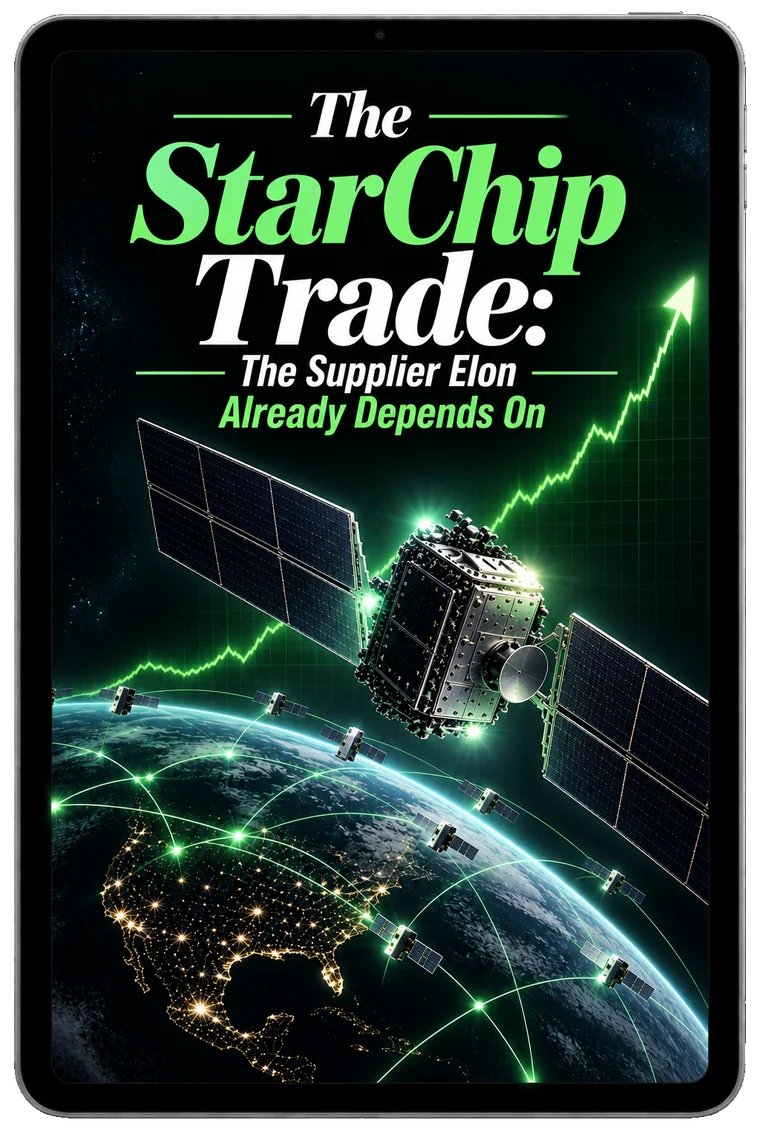
Introducing:“The StarChip Trade: The Supplier Elon Already Depends On”
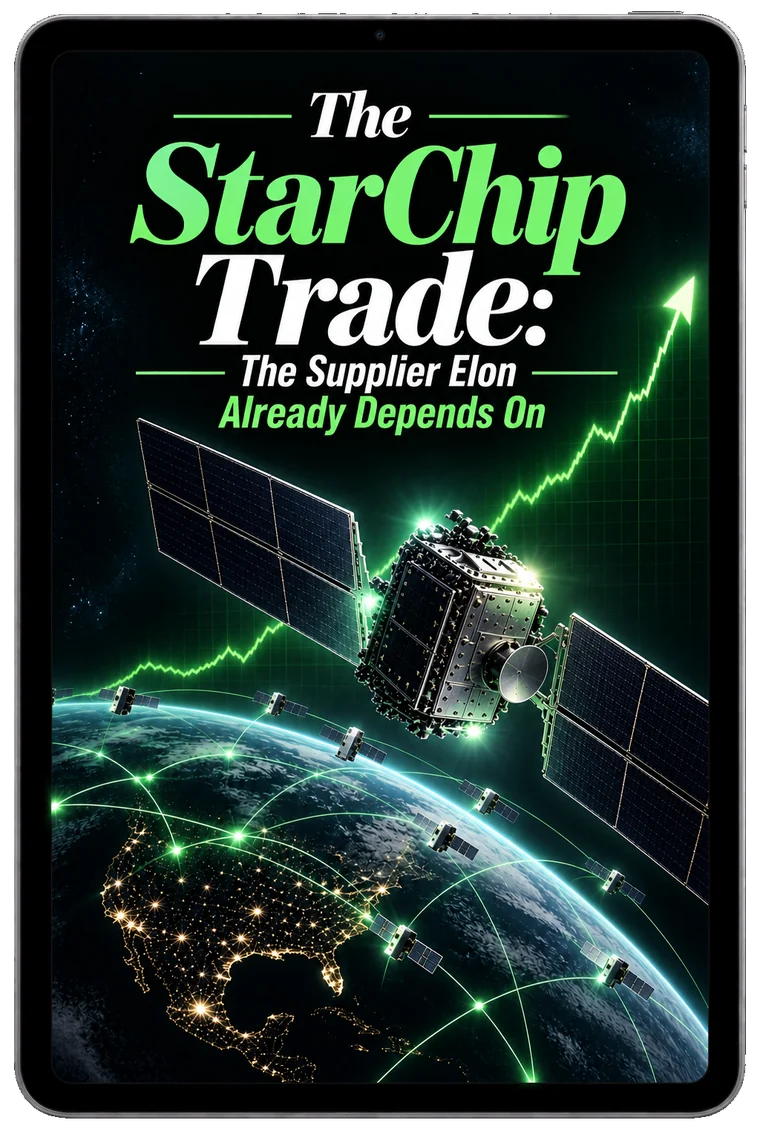
Inside this report, you will get everything you need to execute this trade before December 31st. I will give you:
The Name and Ticker Symbol of the “Second Layer” company already inside more than 10,000 Starlink satellites.
The “Buy-Up-To” Price: The exact price you should pay to ensure maximum upside.
The Exit Strategy: When to sell to lock in potential triple-digit gains.
The full SEC paper trail on their SpaceX partnership, so you can verify every claim yourself.
This report is the only place you will find the name of the StarChip supplier, the company that holds the keys to Elon’s orbital plan.
And I want to send it to you today, absolutely risk-free.
Your Invitation to Behind the Markets

I built Behind the Markets for one simple reason: To level the playing field.
For too long, the biggest gains in the market have been reserved for the “insiders.” The hedge funds, the venture capitalists.
And the well-connected elite who get the information before you do.
My mission is to give you that same level of access.
For the last 35 years, I’ve used my experience as a market maker and institutional investor to find the stocks that Wall Street is ignoring.
We don’t chase hype.
We don’t gamble.
We hunt for dislocation. Moments where the market is wrong, and we are right.
Today, Behind the Markets is one of the fastest-growing independent financial research services in America.
We are a community of serious investors who are tired of the mainstream media’s noise and are ready to build real, generational wealth.
When you join us, you stop guessing.
You stop worrying about what the Fed is going to do next week.
And you start investing with the confidence of an insider.
Here Are the 3 Steps to Take Before December 31st
I want to make sure you have every tool you need to execute the StarChip strategy and navigate the year ahead.
Step 1: Get Into the Space Economy NOW
I’ve already given you the free ticker, UFO, one ticker for a basket of the companies building the space economy. But “The StarChip Trade” gives you the REAL play: the name, ticker, buy-up-to price, and exit strategy for the “Second Layer” company already inside more than 10,000 of Elon’s satellites. Read it first. Act on it today.

Step 2: Build Your Position Around Elon’s Plan
Here’s a detail buried in the Texas filings. The Terafab isn’t expected to use power from the Texas grid. Elon is bringing his own power: natural gas power plants on site, with big battery arrays beside them.
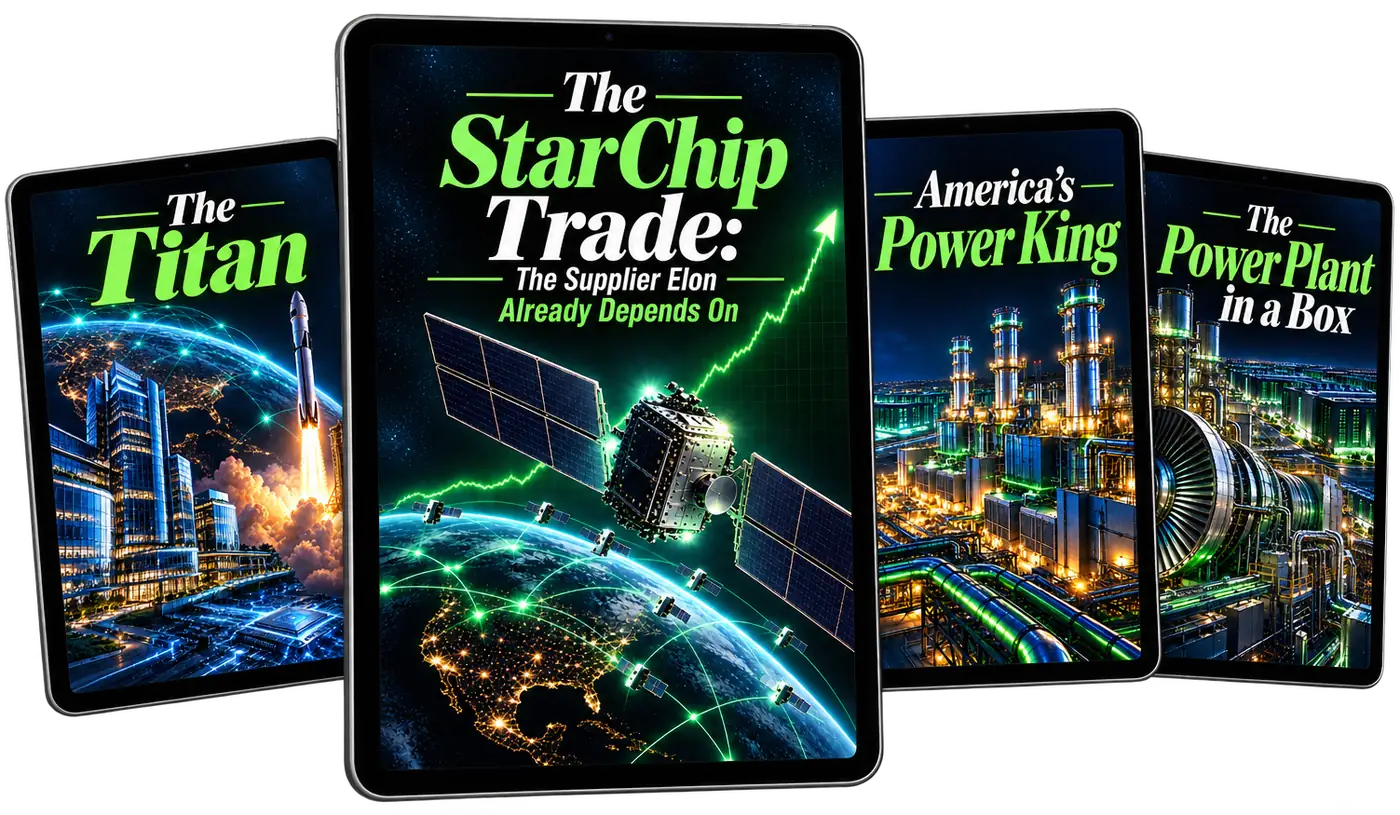
Inside the bonus report, “America’s Power King,” I’ve identified the company whose pipelines carry the natural gas that feeds American data centers, with a pipeline network that reaches the heart of Texas. It’s already in my model portfolio. And it pays you a dividend of over 6% while you wait for the Terafab to light up.

In a second bonus report, “The Titan,” I name SpaceX’s biggest outside owner: the tech giant that put $900 million into SpaceX in 2015. By the end of June 2026, that $900 million investment had grown to about $94 billion. That stake gives you another way to participate in SpaceX’s next stage of growth. “The Titan” identifies the publicly traded company that owns it — and shows you how to buy in.

And in a third bonus report, “The Power Plant in a Box,” I name the company that builds the gas turbines AI data centers are ordering so they can make their own electricity. This summer, one customer ordered 76 of them in a single deal.
That’s three bonus reports and three more stocks: the pipelines that carry Texas gas, the biggest outside stake in SpaceX, and the turbines AI factories are buying to make their own power.
Step 3: Stay Locked In Through December 31st and Beyond.
The market moves fast. Your membership includes everything you need to execute and manage these positions:
12 Monthly Issues of Behind the Markets: Brand-new, high-conviction investment reports delivered to your inbox on the first of every month. These aren’t just “stock tips.” They are deep-dive research reports that explain exactly what to buy, why to buy it, and when to sell.
Each issue targets double or triple-digit potential.
Weekly Market Updates: Every week, I’ll send you a concise briefing on our model portfolio. I’ll tell you what’s happening with our positions, what the “smart money” is doing, and whether we need to adjust our strategy. You will never be left in the dark.
Urgent Trade Alerts: When it’s time to take profits on a winner or buy a dip on a new opportunity, I’ll send a flash alert directly to your inbox. You can act on these in seconds from your phone.
24/7 Members-Only Website Access: You’ll get a private login to our encrypted subscriber portal. Here, you can view our entire Model Portfolio (every open position, entry price, and current gain), access the full archive of past reports, and watch exclusive video updates.
Real People, Real Results
I can tell you about my track record all day, but I prefer to let my readers do the talking.
These are regular folks who decided to take control of their financial future with Behind the Markets.
“Thanks so much, I am a real Dylan Jovine believer. I made so much money on BEAM and EDIT and PLTR it was crazy.”
“Thank you Dylan and team for the most informative and well researched investment advice I have ever received. It has helped make my retirement a lot more secure and fun. I just bought a new car with my savings! Thank you to all your team!”
“That was the fastest money I have ever made in my life. Wow.”
A Price That Removes All Barriers
I firmly believe that Behind the Markets offers better research than services charging $5,000 or $10,000 a year.
My publisher tells me that the fair market value for a subscription, considering our 75% win rate, 45.6% average return, and the depth of research, is $399 per year.
That is the regular price listed on our website right now.
And frankly, considering that a single trade recommendation like the one I’m giving you today could pay for that subscription 100 times over, $399 is a bargain.
But I know that “trust is earned.” You might not know me yet.
I want to remove every single barrier standing between you and the StarChip.
I don’t want price to be the reason you miss out.
So, for a limited time, I am authorizing a massive discount for new subscribers.
You won’t pay $399.
You won’t even pay the standard discounted rate of $99.
If you act right now, through this specific page, I am slashing the price by an additional 50%.
That is not a typo. $49.
That breaks down to less than 14 cents a day.
It’s less than the cost of a sandwich.
For just $49, you get “The StarChip Trade,” the “Second Layer” ticker, and three bonus reports: “America’s Power King,” “The Titan” and “The Power Plant in a Box.”
And a full year of my guidance.
Why Is It So Cheap?
It’s simple.
I know that once you start reading my research and seeing the results in your own brokerage account, you will be a subscriber for life.
I am willing to lose money on this upfront offer just to get my foot in the door and prove my value to you.
But I can’t keep this offer open forever.
My “Ironclad” Double Guarantee

I am so confident in this research that I am going to take all the risk off your shoulders with my six month guarantee.
Guarantee #1: The 100% Satisfaction Promise
Sign up today. Pay the $49. Download “The StarChip Trade” and buy the stocks. Use my service for the next six full months.
If at any point you aren’t completely thrilled, if you don’t feel like this was the best $49 you ever spent, just contact my team, and I will refund 100% of your subscription fee.
Guarantee #2: You Keep Everything
Even if you ask for a refund, you can keep the reports. You can keep the research. You can keep the ticker symbols. They are yours to keep as my way of saying “thank you” for giving us a try.
We are in the final stretch before December 31st.
The Terafab is funded. The satellites are designed. The purchase orders are in. And StarChips are already going up.
You have two choices right now:
Close this page. Ignore the research. Go back to reading the mainstream headlines. Watch from the sidelines as the Terafab rises in Texas and the first AI satellites go up, and wonder “what if” while others make the gains.
Click the button below. Risk $49 (which is fully refundable). Get the tickers. Position yourself in front of the biggest buildout of Elon Musk’s life.
One trade could change your financial life.
The cost to find out is $49.
I think the choice is clear.
I’m ready to help you build your wealth. Are you with me?
Frequently Asked Questions
You may still have a few questions about Behind the Markets or the specific opportunity I’ve shared today.
That is completely normal.
When you are making a decision about your financial future, you should have all the facts. Below, I’ve answered the most common questions I get from new subscribers.
The Final Decision
We are standing at the edge of something I’ve never seen.
In my 35 years on Wall Street, I have seen a lot of trends come and go.
I’ve seen the Dot-Com boom.
I’ve seen the Housing Bubble.
I’ve seen the Crypto craze.
But I have never seen a man file with the government to launch a million computers into space, and then race to break ground on a $119 billion factory to build the AI chips that run them.
We are witnessing the birth of a new place to put the world’s thinking.
With the Terafab funded, the construction date on file, and December 31st approaching, this is no longer speculation.
It is happening.
You now have a clear roadmap to profit from this event.
I’ve given you the “free play.” UFO.
A basket of rocket, satellite and space-equipment companies, in one investment.
If you do nothing else today, buy shares of that fund.
It will likely treat you well.
But if you are serious about building generational wealth, if you want the kind of returns that can pay off a mortgage or fund a comfortable retirement, you cannot stop there.
The real money isn’t in the fund. The real money is in the “Second Layer” play.
It’s in owning the one company already inside more than 10,000 of Elon’s satellites.
It’s in owning the company Elon has on contract to build the StarChip.
A buyout, or an order for the AI satellites, could be announced at any moment.
Elon Musk moves at the speed of thought.
By the time you read about this deal in the Wall Street Journal, the gap-up will have already happened.
The insiders will be selling their shares to you at a premium.
Don’t let that happen.
Click the Button Below RIGHT NOW
You have two paths in front of you.
Path #1: You can close this page.
Go back to your daily routine.
Watch from the sidelines as the news cycle heats up.
Watch the Terafab go up in Grimes County, Texas, and see the headlines about it.
Watch as the first AI satellites launch and the stocks I’ve identified gap up overnight.
And then ask yourself: “Why didn’t I act when I had the chance?”
Path #2: You can take action.
Right now.
In the next five minutes.
Click the button below.
Complete your $49 subscription.
In five minutes, you’ll have the ticker symbol in your hands.
In five days, you could be positioned ahead of 99% of investors.
Wait too long, and you may be reading about this opportunity in the Wall Street Journal, after the gains have already been made.
If you missed out on Amazon in 1997...
If you missed out on Tesla in 2010...
If you missed out on Nvidia in 2016...
If you watched Lumentum go from $40 to $1,133 on the AI buildout and did nothing...
If you watched Credo go from $7 to $302 and told yourself “next time”...
This is next time.
Do not miss this.
History rarely gives you a second chance.
But today, the market is handing you another shot.
The countdown to December 31st has begun.
That day also ends the quarter this company’s CEO said would bring faster growth. The numbers come out early next year.
D3 comes later. StarChips are going up now.
If this company follows even part of the path Lumentum carved, a $10,000 position could become $100,000.
When those numbers come out, all of Wall Street sees them at once. That’s when I believe the repricing begins.
I want you in before it does.
A year from now, looking back at this moment, you will either be kicking yourself for doing nothing, or your children and grandchildren will look back and say, “That was the moment everything changed for our family.”
That was the day they got into the StarChip before December 31st.
The cost to find out is $49.
I know which path I’d choose.
Click the button below RIGHT NOW and I’ll see you on the inside.
Sincerely,